
JL Landworx Services
Demolition
Demolition is the controlled tear-down and removal of houses, garages, decks, driveways, sheds, and other light structures — including debris haul-off and restoring the site for what comes next.
Demolition for planned site work
Sometimes the first step of a project is taking something down. JL Landworx handles residential and light-structure demolition across Central Minnesota and the greater Twin Cities — houses and cabins, garages and outbuildings, decks and porches, driveways and slabs, sheds, and interior tear-outs referenced as part of a larger scope.
A demolition estimate can combine tear-down, debris handling, foundation or slab work, backfill, and rough grading when those items are included in the agreed scope. Follow-on excavation can also be planned as a connected phase. Before structural demolition, the owner must complete the utility, regulated-material, permit, and inspection steps that apply to the property.
Problems demolition solves
- An old house or cabin has to come down before a new one can be built
- A dilapidated garage, shed, or outbuilding is unsafe or past the point of repair
- A deck, porch, or addition needs to be removed as part of a remodel or rebuild
- A cracked concrete or failed asphalt driveway needs full tear-out before replacement
- A property purchase came with structures the new owner doesn't want
- Fire- or storm-damaged structures need to be cleared so the lot can be reused
What we do
- Full house and cabin tear-downs
- Garage, shed, barn, and outbuilding demolition
- Deck and porch removal, including footings
- Concrete and asphalt driveway tear-out
- Interior tear-outs and strip-outs as part of a larger scope
- Foundation and slab removal or partial removal
- Debris sorting, loading, and haul-off
- Site restoration — backfill, compaction, and rough grading after demolition
Our demolition process
Site review and scope
We walk the property, confirm what comes down and what stays, check access for equipment and trucks, and identify anything that needs special handling.
Disconnects and preparation
Utilities serving the structure must be disconnected before structural demolition begins. We confirm the disconnects are done and coordinate any required permits or inspections with you.
Demolition
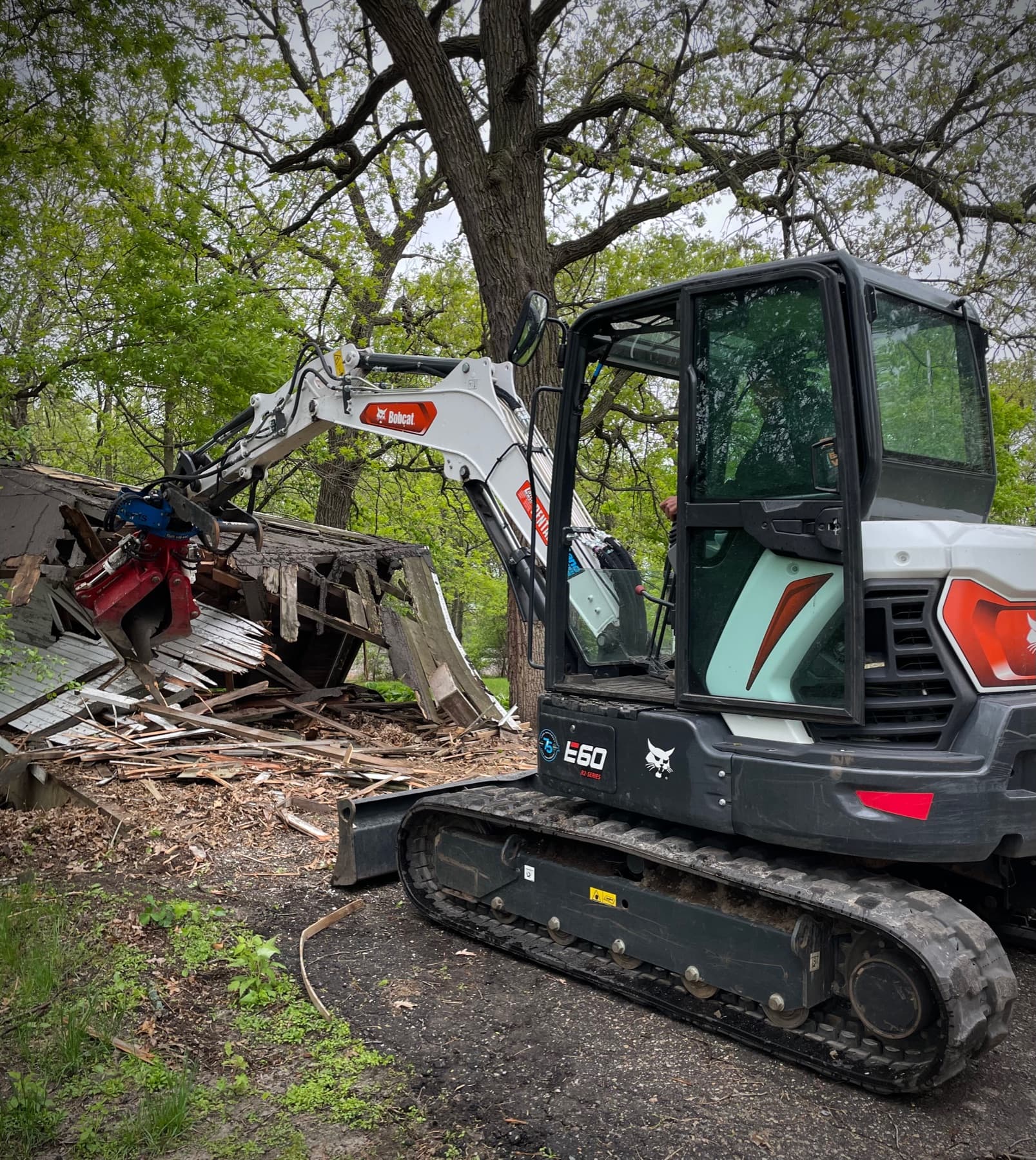
The structure comes down methodically with excavators. Material is sorted as we go so recyclable and disposeable debris go to the right places.
Debris removal
All demolition debris is loaded and hauled off. Concrete, asphalt, and clean material are separated where it makes sense to do so.
Site restoration
Excavations are backfilled and compacted, and the site is brought to rough grade — clean, stable, and ready for the next phase of your project.
Common projects
- House and cabin tear-downs for rebuild lots
- Garage and outbuilding removal
- Deck and porch demolition ahead of rebuilds
- Driveway tear-out and replacement prep
- Shed and small-structure removal
- Fire- or storm-damaged structure clearing
- Lot clearing with structures for new construction
Planning your project
What affects cost
- Size and construction of the structure — a block garage costs more to demolish than a wood shed
- Presence of a basement or foundation to be removed or filled
- Volume of debris and disposal fees
- Site access for equipment and haul trucks
- Hazardous materials such as asbestos, which require separate abatement before demolition
- Distance to disposal facilities
- Whether site restoration and grading are part of the same scope
What affects timing
- Size and complexity of the structure
- Utility disconnect scheduling — work can't start until services are cut
- Permit and inspection turnaround where required
- Weather and ground conditions for haul-off and site restoration
- Disposal facility hours and haul distance
Good to know
- Confirm applicable utility disconnections with the providers responsible for the property before structural demolition is scheduled.
- Many jurisdictions require a demolition permit; check with your city or township before scheduling.
- Older structures may contain asbestos or other regulated materials that must be abated separately before tear-down.
- Decide what happens to the foundation — removed, partially removed, or filled in place — before work starts.
- If you're rebuilding, bundling demolition with the excavation scope keeps the site moving without a second mobilization.
Specialized work
Demolition services
- Home DemolitionHome demolition is the full tear-down of a house or cabin — structure, debris, and foundation — leaving the lot clean, backfilled, and graded so it's ready to rebuild.Learn more →
- Deck DemolitionDeck demolition is the removal of an old deck or porch — framing, decking, railings, stairs, and footings — with all debris hauled off and the area prepped for its next use.Learn more →
- Garage DemolitionGarage demolition is the tear-down and removal of garages and outbuildings — structure, debris, and slab — with the site restored and ready for a rebuild or a new use.Learn more →
- Driveway DemolitionDriveway demolition is the tear-out and haul-off of a failed concrete or asphalt driveway, with the subgrade prepared and compacted so the new surface starts on stable ground.Learn more →
Related services
Often paired with
- Home DemolitionHome demolition is the full tear-down of a house or cabin — structure, debris, and foundation — leaving the lot clean, backfilled, and graded so it's ready to rebuild.Learn more →
- Garage DemolitionGarage demolition is the tear-down and removal of garages and outbuildings — structure, debris, and slab — with the site restored and ready for a rebuild or a new use.Learn more →
- Deck DemolitionDeck demolition is the removal of an old deck or porch — framing, decking, railings, stairs, and footings — with all debris hauled off and the area prepped for its next use.Learn more →
- Driveway DemolitionDriveway demolition is the tear-out and haul-off of a failed concrete or asphalt driveway, with the subgrade prepared and compacted so the new surface starts on stable ground.Learn more →
- ExcavationExcavation is the controlled removal and placement of soil to prepare a site for construction — from foundations and basements to utilities, driveways, and drainage.Learn more →
Plan the next step
Demolition resources
- View project photosSee first-party images of JL Landworx excavation, clearing, wall, demolition, and landscape work.Learn more →
- Browse service areasFind dedicated service pages across Central Minnesota and the greater Twin Cities.Learn more →
- Request a written quoteShare the property address, project goal, access details, and preferred timing so the site review starts with useful information.Learn more →
FAQ
Demolition questions
Do I need a permit to demolish a structure?
Requirements vary by structure and jurisdiction. The property owner should confirm permits, utility disconnections, inspections, and regulated-material obligations with the responsible authorities and providers before scheduling. The demolition scope can then follow that approved information.
What happens to all the debris?
It's sorted, loaded, and hauled off as part of the job. Concrete, asphalt, and other clean materials are separated where practical. Disposal fees are part of the quote, so there are no surprises afterward.
Can you demolish a house with a basement?
Yes. The structure comes down, and then the foundation is either removed or the basement cavity is backfilled and compacted in lifts so it doesn't settle. Which approach makes sense depends on what's planned for the lot, and we discuss it before work starts.
What about asbestos or other hazardous materials?
Regulated materials like asbestos have to be abated by a licensed abatement contractor before demolition. If your structure's age or materials suggest that's a possibility, plan on an inspection first — it affects both schedule and cost.
What does the site look like when you're done?
Clean, backfilled, compacted, and brought to rough grade. We don't leave holes, debris piles, or rutted ground — the lot is left stable and ready for whatever comes next.
Plan your demolition project
Tell JL Landworx what you need the site to support, where the work is located, and what must happen before or after demolition. We’ll review the scope and provide a project-specific quote and schedule.