
JL Landworx Services
Home Demolition
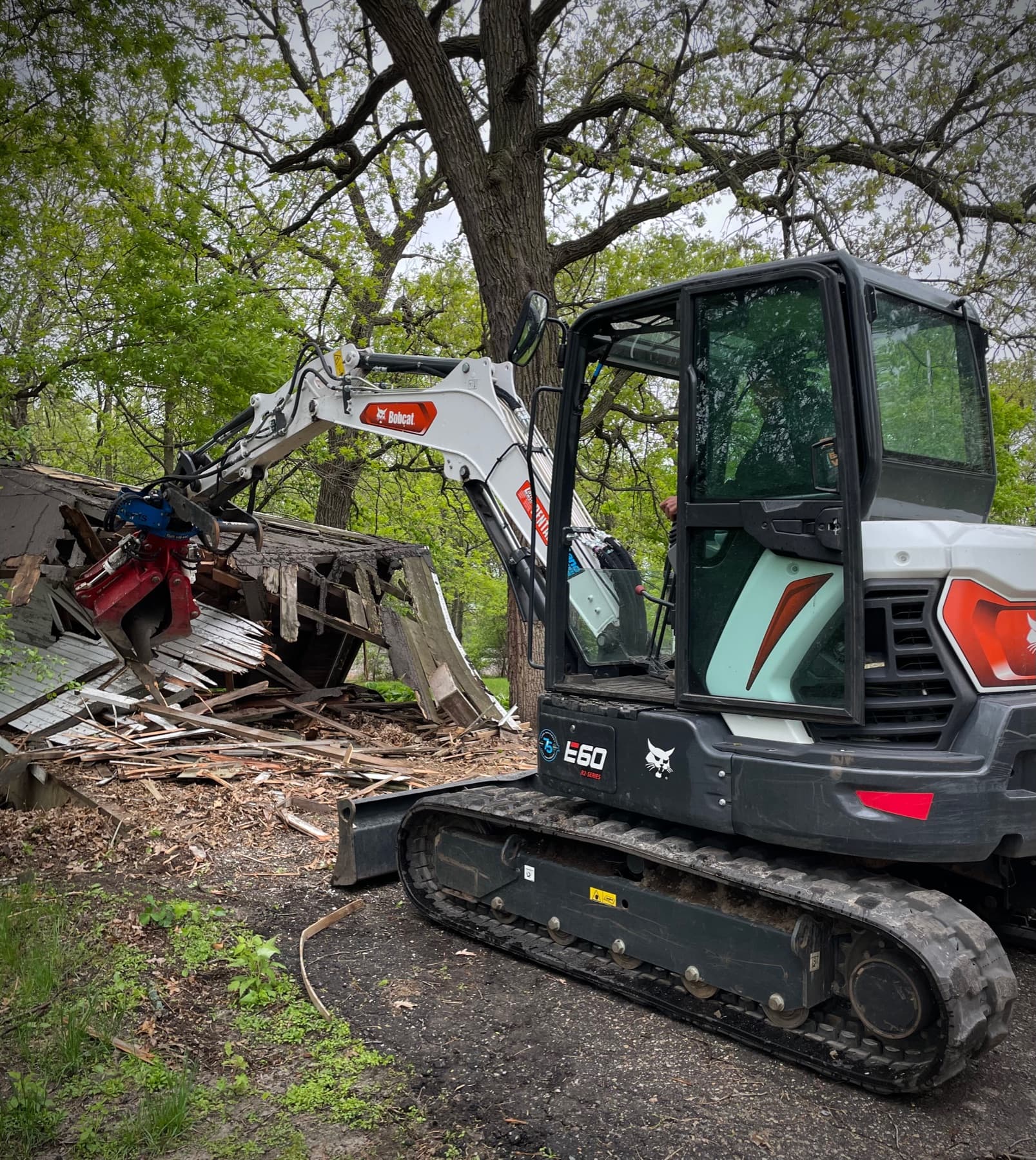
Home demolition is the full tear-down of a house or cabin — structure, debris, and foundation — leaving the lot clean, backfilled, and graded so it's ready to rebuild.
Home Demolition for planned site work
Taking down a house is usually about the lot, not the building. The structure has reached the end of its life — or the land is worth more than what's sitting on it — and the fastest path to a new build is a clean tear-down. JL Landworx provides home demolition services across Central Minnesota and the greater Twin Cities, handling houses, cabins, and seasonal cottages from teardown through site restoration.
The written scope can include structure removal, debris handling, foundation removal or an approved backfill plan, rough grading, and follow-on excavation. The next use of the lot determines which items belong together. Before demolition, the owner must complete the utility, regulated-material, permit, and inspection steps that apply to the home.
Problems home demolition solves
- A house is beyond economical repair and the lot is being redeveloped
- A cabin or cottage needs to come down to make room for a new build
- A fire- or storm-damaged home has to be cleared before reconstruction
- A purchased property came with a structure the new owner plans to replace
- An estate or long-vacant property needs the home removed before sale or reuse
- A builder needs a tear-down and a build-ready lot on a tight schedule
What we do
- Full tear-down of single-family houses, cabins, and cottages
- Attached garage, porch, and deck removal as part of the same scope
- Basement and foundation removal
- Foundation-in-place backfill and compaction as an alternative to removal
- Debris sorting, loading, and complete haul-off
- Utility disconnect sequencing before demolition
- Backfill, compaction, and rough grading of the building site
- Follow-on excavation for the new foundation as a continuous scope
Our home demolition process
Site review and plan
We walk the property, confirm the demolition limits, discuss foundation removal versus fill-in-place, and identify access, haul routes, and anything to be protected.
Disconnects and permits
Electric, gas, water, and sewer or septic serving the home must be disconnected before structural demolition. We confirm disconnects are complete and coordinate on permit requirements.
Tear-down
The house comes down methodically with excavators, working from the top down. Debris is sorted and loaded as the structure comes apart.
Foundation work
The foundation is removed or the basement cavity is backfilled and compacted in lifts, per the plan made at the site review.
Site restoration
The lot is graded to rough grade with proper drainage, leaving stable, build-ready ground — or ready for the new foundation dig to begin.
Common projects
- Tear-down and rebuild residential lots
- Cabin and lake cottage removal for new construction
- Fire- and storm-damaged home clearing
- Estate and vacant property structure removal
- Infill lot preparation for builders
- House and attached garage combined demolition
Planning your project
What affects cost
- Size and construction of the home — square footage, stories, and materials
- Whether there's a basement and whether the foundation is removed or filled
- Volume of debris and disposal fees
- Hazardous material abatement, which must be completed separately before demolition
- Site access for equipment and haul trucks
- Haul distance to disposal facilities
- Whether backfill material must be imported
What affects timing
- Utility disconnect scheduling — demolition can't begin until services are cut
- Permit and inspection turnaround in your jurisdiction
- Abatement completion if regulated materials are present
- Size of the structure and foundation scope
- Weather and ground conditions for haul-off and backfill compaction
Good to know
- Confirm utility-disconnection responsibilities and completion evidence with the providers serving the property before scheduling demolition.
- Have a qualified professional identify any regulated-material survey or abatement required for the specific structure; that work is separate from demolition.
- Decide on foundation removal versus fill-in-place based on your rebuild plans — your builder's excavation plan usually dictates the answer.
- Well and septic systems on the property may need to be properly abandoned; check your county's requirements.
- Tell us what stays — trees, driveways, outbuildings — so protection and demolition limits are clear before machines arrive.
Related services
Often paired with
- DemolitionDemolition is the controlled tear-down and removal of houses, garages, decks, driveways, sheds, and other light structures — including debris haul-off and restoring the site for what comes next.Learn more →
- Garage DemolitionGarage demolition is the tear-down and removal of garages and outbuildings — structure, debris, and slab — with the site restored and ready for a rebuild or a new use.Learn more →
- ExcavationExcavation is the controlled removal and placement of soil to prepare a site for construction — from foundations and basements to utilities, driveways, and drainage.Learn more →
- Land ClearingLand clearing is the removal of trees, brush, stumps, and surface obstacles so a parcel can be built on, farmed, or maintained — from a single building lot to multi-acre tracts.Learn more →
- GradingGrading is shaping the ground to the right elevations and slopes — rough grading for construction, finish grading for lawns, and regrading to fix drainage.Learn more →
Plan the next step
Home Demolition resources
- View project photosSee first-party images of JL Landworx excavation, clearing, wall, demolition, and landscape work.Learn more →
- Browse service areasFind dedicated service pages across Central Minnesota and the greater Twin Cities.Learn more →
- Request a written quoteShare the property address, project goal, access details, and preferred timing so the site review starts with useful information.Learn more →
FAQ
Home Demolition questions
Should the foundation be removed or filled in place?
It depends on what you're building next. If the new home's foundation will sit in the same footprint, full removal is usually the cleaner path. If the area will be yard or the new structure sits elsewhere, backfilling and compacting the cavity in lifts is often the economical choice. Your builder's site plan usually settles it — we follow that plan.
How long does it take to demolish a house?
The schedule depends on the structure and foundation, access, debris volume and disposal, required disconnects or approvals, regulated-material work, weather, and restoration scope. The quote should provide a sequence based on those confirmed conditions rather than a generic number of days.
What has to happen before you can start?
All utilities serving the home must be disconnected, required permits in hand, and any asbestos or regulated materials abated. Once those boxes are checked, the tear-down and site restoration move quickly.
Can you dig the new foundation after the tear-down?
Those phases can be included in one coordinated estimate when the new plans, approvals, access, material handling, and handoff requirements are available. The written scope should state exactly where demolition ends and new-site excavation begins.
What condition is the lot in when you finish?
Backfilled, compacted, and brought to rough grade with drainage accounted for. No debris, no open holes — a clean lot your builder can stake out and start on.
Plan your home demolition project
Tell JL Landworx what you need the site to support, where the work is located, and what must happen before or after home demolition. We’ll review the scope and provide a project-specific quote and schedule.