
JL Landworx Services
Grading
Grading is shaping the ground to the right elevations and slopes — rough grading for construction, finish grading for lawns, and regrading to fix drainage.
Grading for planned site work
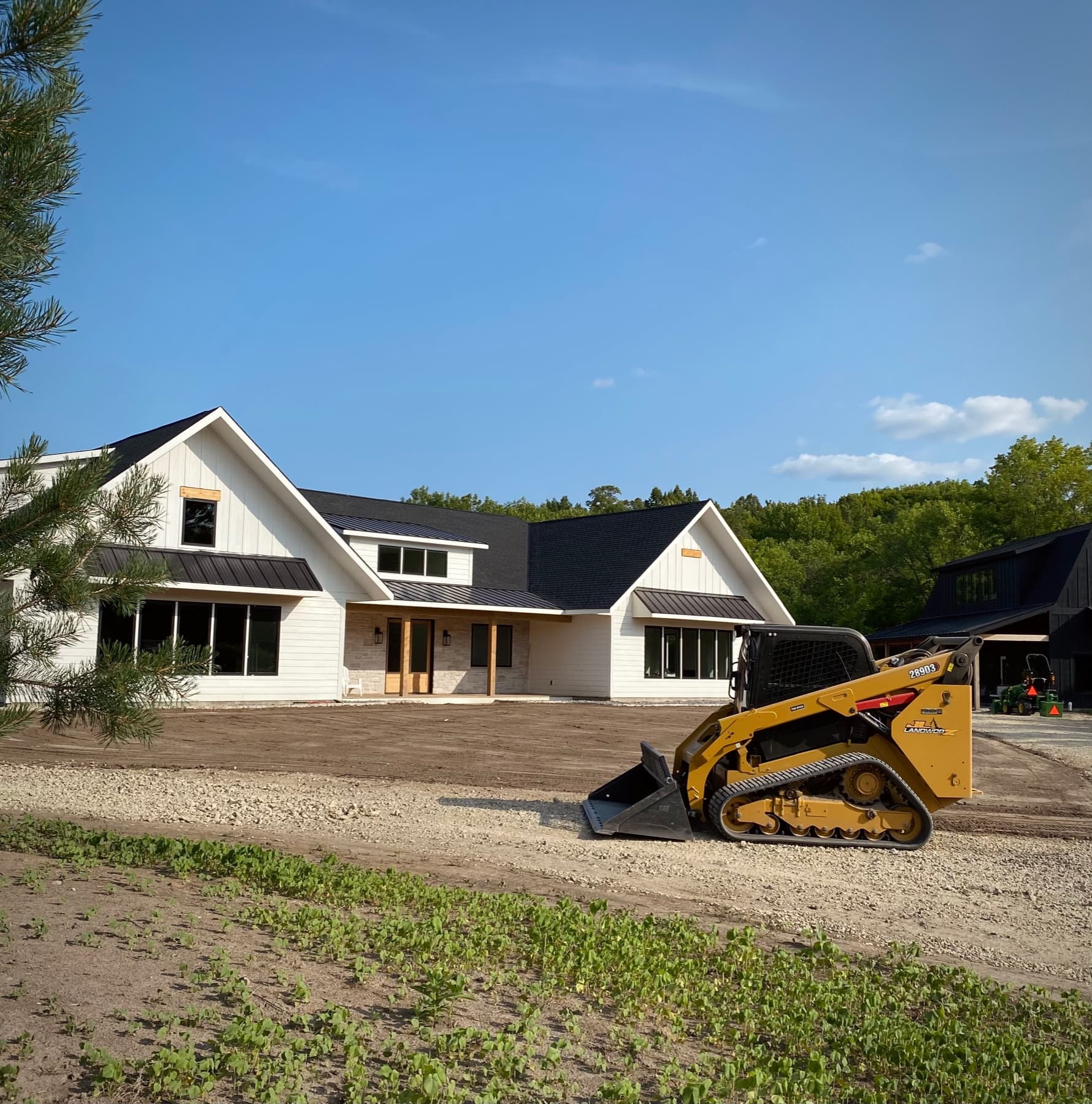
Grading is how you control where water goes and how a site looks and functions. Rough grading establishes the basic elevations and slopes for construction. Finish grading puts the final shape on the ground before seed, sod, or landscaping. JL Landworx provides grading services for new construction, existing homes, and rural properties across Central Minnesota and the greater Twin Cities.
Grading is also how most drainage problems get fixed. If water runs toward your foundation, ponds in the yard, or washes out your driveway, the ground is shaped wrong. Regrading to establish positive slope away from structures and toward proper outlets solves the problem at the surface instead of just managing the symptoms.
Minnesota's freeze-thaw cycles and wet springs are hard on poorly graded sites. Getting the slopes right — and compacting fill so it stays put — keeps water moving where it should year after year.
Problems grading solves
- Water pools in the yard or runs toward the house instead of away from it
- A new construction site needs rough grading before the next phase can start
- A lawn area needs finish grading before seed or sod goes down
- Slopes are too steep, too flat, or eroding and need to be reshaped
- A previous contractor left the site rough, rutted, or out of spec
- Settled backfill around a foundation has created a low spot that collects water
What we do
- Rough grading for new construction sites and building pads
- Finish grading for lawns, seed, and sod preparation
- Yard regrading to correct drainage and eliminate standing water
- Slope correction and reshaping for erosion-prone areas
- Grading around foundations to establish positive drainage
- Driveway and parking area grading
- Topsoil placement, spreading, and final shaping
- Swale and drainage-way grading to move surface water
Our grading process
Site walk and evaluation
We walk the property, look at existing elevations and how water currently moves, and talk through what the finished grade needs to accomplish.
Layout and grade plan
Target elevations and slopes are established from the site plan or agreed measurements, so everyone knows what the finished ground should look like.
Rough grading
High spots are cut, low spots are filled, and the basic slopes are shaped. Fill is compacted so it doesn't settle after the work is done.
Topsoil and finish grading
Topsoil is placed or respread and the surface is finished smooth to final grade, ready for seed, sod, or the next trade.
Common projects
- New home and construction site grading
- Yard regrading to fix drainage problems
- Finish grading for lawns and landscaping
- Slope reshaping and erosion repair
- Driveway and parking pad grading
- Foundation backfill settlement repair
Planning your project
What affects cost
- Size of the area to be graded
- Amount of cutting and filling required to reach target elevations
- Whether fill or topsoil has to be brought in, and haul distance
- Site access and how tight the working area is
- Existing conditions — ruts, debris, buried material, or heavy vegetation
- Precision required — finish grading for sod is slower than rough grading
What affects timing
- Size and complexity of the area
- Weather — grading wet soil ruins structure and compacts poorly
- Whether other work (excavation, utilities, foundations) has to finish first
- Availability of fill or topsoil if material is being imported
Good to know
- Grading for drainage works best as part of a bigger picture — downspouts, swales, and outlets all have to work together.
- If the property is new construction, coordinate finish grading with your landscaper or sod installer so topsoil depth meets their requirements.
- Freshly graded and seeded ground is vulnerable until vegetation establishes — plan erosion control for disturbed slopes.
- Fall and spring are busy seasons for grading; booking ahead keeps your project on schedule.
Related services
Often paired with
- ExcavationExcavation is the controlled removal and placement of soil to prepare a site for construction — from foundations and basements to utilities, driveways, and drainage.Learn more →
- Site PreparationSite preparation is the work that turns raw or cleared land into a buildable site — soil beds, building pads, and subgrade preparation done to plan elevations.Learn more →
- Drainage SolutionsDrainage work reshapes or plumbs the ground so water goes where it should — fixing standing water, wet basements, and erosion with swales, culverts, and drains.Learn more →
- Driveways and CulvertsDriveway and culvert work covers building and rebuilding gravel driveways, excavating and prepping the base, and installing culverts so water crosses under the drive instead of over it.Learn more →
- Erosion ControlErosion and sediment control keeps soil on your site during and after construction — silt fence, inlet protection, and stabilization for disturbed ground and shorelines.Learn more →
Plan the next step
Grading resources
- View project photosSee first-party images of JL Landworx excavation, clearing, wall, demolition, and landscape work.Learn more →
- Browse service areasFind dedicated service pages across Central Minnesota and the greater Twin Cities.Learn more →
- Request a written quoteShare the property address, project goal, access details, and preferred timing so the site review starts with useful information.Learn more →
FAQ
Grading questions
Can regrading fix water pooling in my yard?
Often, yes. Most standing-water problems are slope problems — the ground is flat or pitched the wrong way. Regrading to give the water somewhere to go usually solves it. If the water has nowhere to drain to, we may pair grading with a swale, drain tile, or other drainage work.
What is the difference between rough grading and finish grading?
Rough grading establishes the basic elevations and slopes — the heavy shaping. Finish grading is the final pass: topsoil spread to the right depth and the surface smoothed so seed or sod can go down. New construction typically needs both, at different stages.
How much slope do I need away from my house?
Enough that surface water moves away from the foundation instead of toward it. The right slope for your property depends on the soil, the layout, and where the water can legally and practically go. We evaluate that on the site walk rather than applying a one-size number.
Can you grade a yard without tearing up the whole lawn?
It depends on how much correction is needed. Minor low spots can sometimes be topdressed, but real drainage correction means moving dirt, and that disturbs the surface. The good news is finish grading leaves the ground ready for seed or sod, so the lawn comes back quickly.
When can grading be done during the year?
Grading works whenever the ground isn't frozen or saturated. Spring thaw and extended wet periods can shut down dirt work temporarily — wet soil compacts poorly and equipment makes a mess. We schedule around conditions and tell you honestly when waiting a week will produce a better result.
Plan your grading project
Tell JL Landworx what you need the site to support, where the work is located, and what must happen before or after grading. We’ll review the scope and provide a project-specific quote and schedule.