
JL Landworx Services
Drainage Solutions
Drainage work reshapes or plumbs the ground so water goes where it should — fixing standing water, wet basements, and erosion with swales, culverts, and drains.
Drainage for planned site work
Drainage problems all come down to one thing: water is going where you don't want it. The fix is giving it a better path — reshaping the surface with grading and swales, or moving it underground with drain tile, culverts, and buried downspout lines. JL Landworx solves drainage problems on homes, acreages, and construction sites across Central Minnesota and the greater Twin Cities.
Water is patient. A little ponding becomes a wet basement, a washed-out driveway, or an eroding slope if it is ignored. Minnesota's wet springs and freeze-thaw cycles make small drainage issues worse every year they go unfixed, and they punish quick fixes that don't address where the water actually goes.
Every property is different, so we start by watching how water moves on yours — where it comes from, where it sits, and where it can legally and practically be sent. Then we fix the cause, not just the symptom.
Problems drainage solves
- Standing water in the yard that never seems to dry out
- Water seeping into the basement or against the foundation after rain
- A driveway or low spot that floods or washes out every spring
- Downspouts dumping water right next to the house
- A ditch or swale that has silted in and no longer carries water
- Erosion cutting channels across slopes, lawns, or gravel drives
What we do
- Surface drainage correction with grading and swales
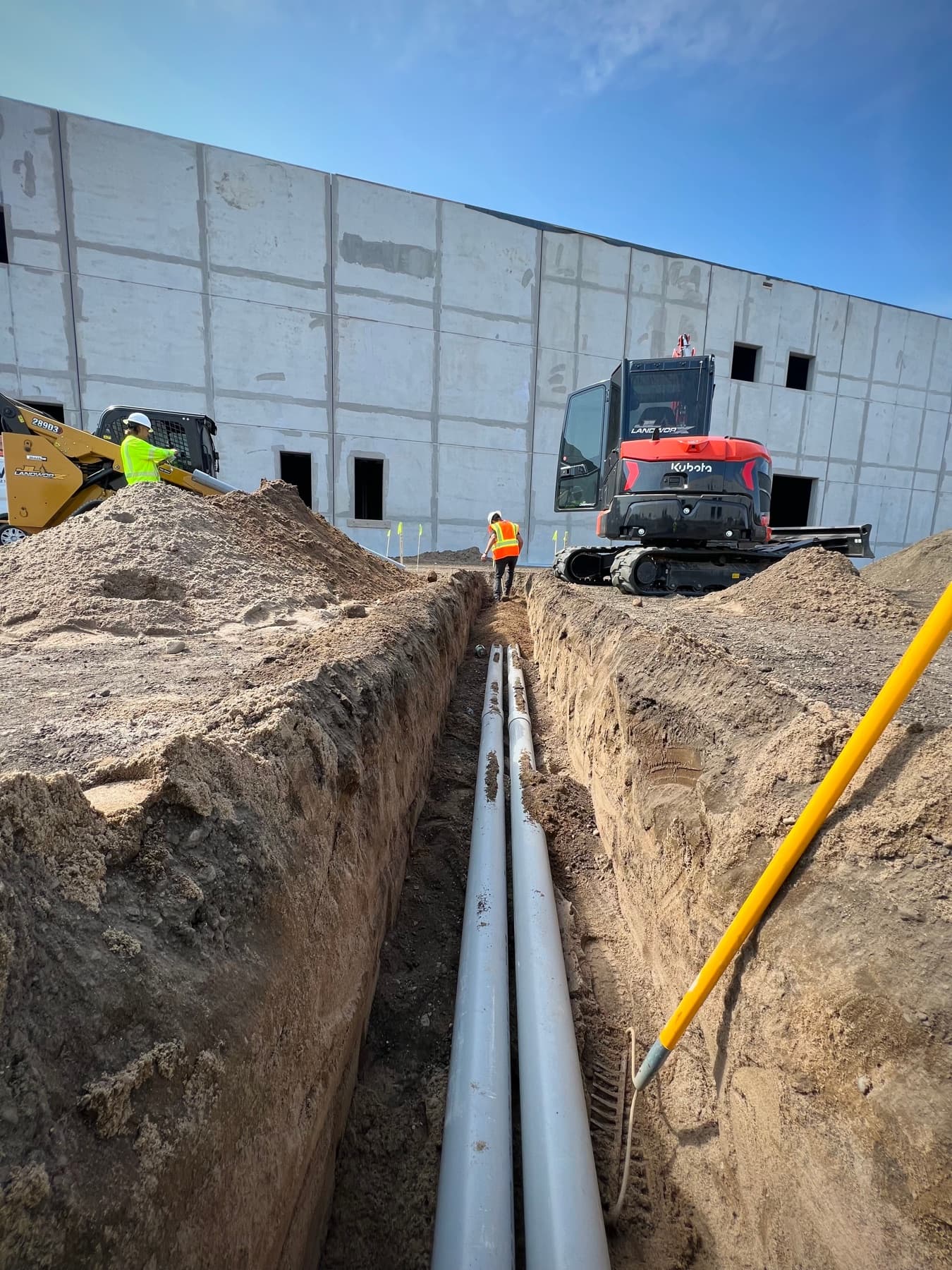
- Buried drain systems to move water away from foundations and low areas
- Culvert installation and replacement for driveways and ditches
- Downspout and sump discharge buried lines and daylighting
- Ditch cleaning, reshaping, and re-establishment
- French-style drain installation for saturated soil and seepage areas
- Overflow and outlet work for ponds and low areas
- Drainage integrated with grading and site preparation for new construction
Our drainage process
Site walk and water evaluation
We walk the property, trace where water comes from and where it goes now, and identify realistic outlet options before recommending anything.
Plan and quote
You get a plain-language explanation of the problem and the proposed fix — what will be dug, shaped, or buried, and where the water will end up.
Locates and excavation
Utility locates are called in before digging. Swales are cut, trenches are excavated, and pipe or culvert is set at the correct slope.
Backfill and surface restoration
Trenches are backfilled and compacted, the surface is graded to drain, and disturbed areas are left ready for seed or sod.
Common projects
- Wet basement and foundation drainage correction
- Yard drainage and standing-water fixes
- Driveway culverts and ditch drainage
- Downspout and sump pump discharge management
- New construction drainage planning
- Acreage and rural property water management
Planning your project
What affects cost
- How much surface reshaping versus buried pipe the fix requires
- Length and depth of trenches or drain runs
- Pipe, culvert, and material sizes needed for the water volume
- Where the water can be discharged and how far that is
- Site access and obstacles — landscaping, fences, pavement, trees
- Soil conditions and groundwater encountered during the dig
What affects timing
- Scope — a downspout line is a short job; reworking drainage across an acreage is not
- Weather and soil moisture at the time of the work
- Utility locate turnaround before digging
- Whether the work ties into other projects like grading or driveway construction
Good to know
- The single most important question in drainage is where the water goes — the outlet drives the whole design.
- Water that crosses property lines or enters public ditches and roadways can be subject to local rules; it is worth asking your township, city, or county before redirecting large flows.
- Drainage work is most effective when it is coordinated with grading, downspout routing, and driveway work instead of done piecemeal.
- Photograph or video the problem during a heavy rain if you can — it helps us understand the issue before the site walk.
Related services
Often paired with
- GradingGrading is shaping the ground to the right elevations and slopes — rough grading for construction, finish grading for lawns, and regrading to fix drainage.Learn more →
- Driveways and CulvertsDriveway and culvert work covers building and rebuilding gravel driveways, excavating and prepping the base, and installing culverts so water crosses under the drive instead of over it.Learn more →
- ExcavationExcavation is the controlled removal and placement of soil to prepare a site for construction — from foundations and basements to utilities, driveways, and drainage.Learn more →
- Erosion ControlErosion and sediment control keeps soil on your site during and after construction — silt fence, inlet protection, and stabilization for disturbed ground and shorelines.Learn more →
- Utility TrenchingUtility trenching is excavating narrow, properly sloped trenches for buried water, sewer, septic, electric, and other lines — then backfilling and compacting them correctly.Learn more →
Plan the next step
Drainage resources
- View project photosSee first-party images of JL Landworx excavation, clearing, wall, demolition, and landscape work.Learn more →
- Browse service areasFind dedicated service pages across Central Minnesota and the greater Twin Cities.Learn more →
- Request a written quoteShare the property address, project goal, access details, and preferred timing so the site review starts with useful information.Learn more →
FAQ
Drainage questions
Why is my basement wet if I don't see standing water outside?
Water doesn't have to pond on the surface to cause problems. Saturated soil against the foundation, downspouts discharging next to the house, or grade that slopes toward the basement wall all push water where you don't want it. The fix usually combines surface grading with moving roof and surface water away from the foundation.
What is a French-style drain and when does it make sense?
It is a gravel-filled trench with perforated pipe that collects water from saturated soil and carries it to an outlet. It makes sense where water is moving through the ground — seepage areas, soggy slopes, wet spots along foundations. It is not a fix for surface runoff, which is better handled with grading and swales.
Can you just bury my downspouts?
Yes, and it is one of the most effective drainage fixes per dollar. Roof water is a huge share of the water hitting your foundation. We bury solid pipe from the downspouts and daylight it at a suitable outlet away from the house, sized and sloped so it doesn't freeze up or back up.
Where does the water go after you fix the drainage?
Somewhere appropriate on your property — a ditch, swale, pond, or lower area that can accept it. We never just push a problem onto a neighbor or into a place it can't go. The available outlets on your property are the first thing we evaluate, because they shape every option.
Will fixing drainage tear up my yard?
Buried drains and swales require digging, so there is disturbance — but we backfill, compact, and finish-grade the work area so it is ready for seed or sod. Most yards recover within a growing season, and the water problem is gone permanently instead of returning every spring.
Plan your drainage project
Tell JL Landworx what you need the site to support, where the work is located, and what must happen before or after drainage. We’ll review the scope and provide a project-specific quote and schedule.