
JL Landworx Services
Utility Trenching
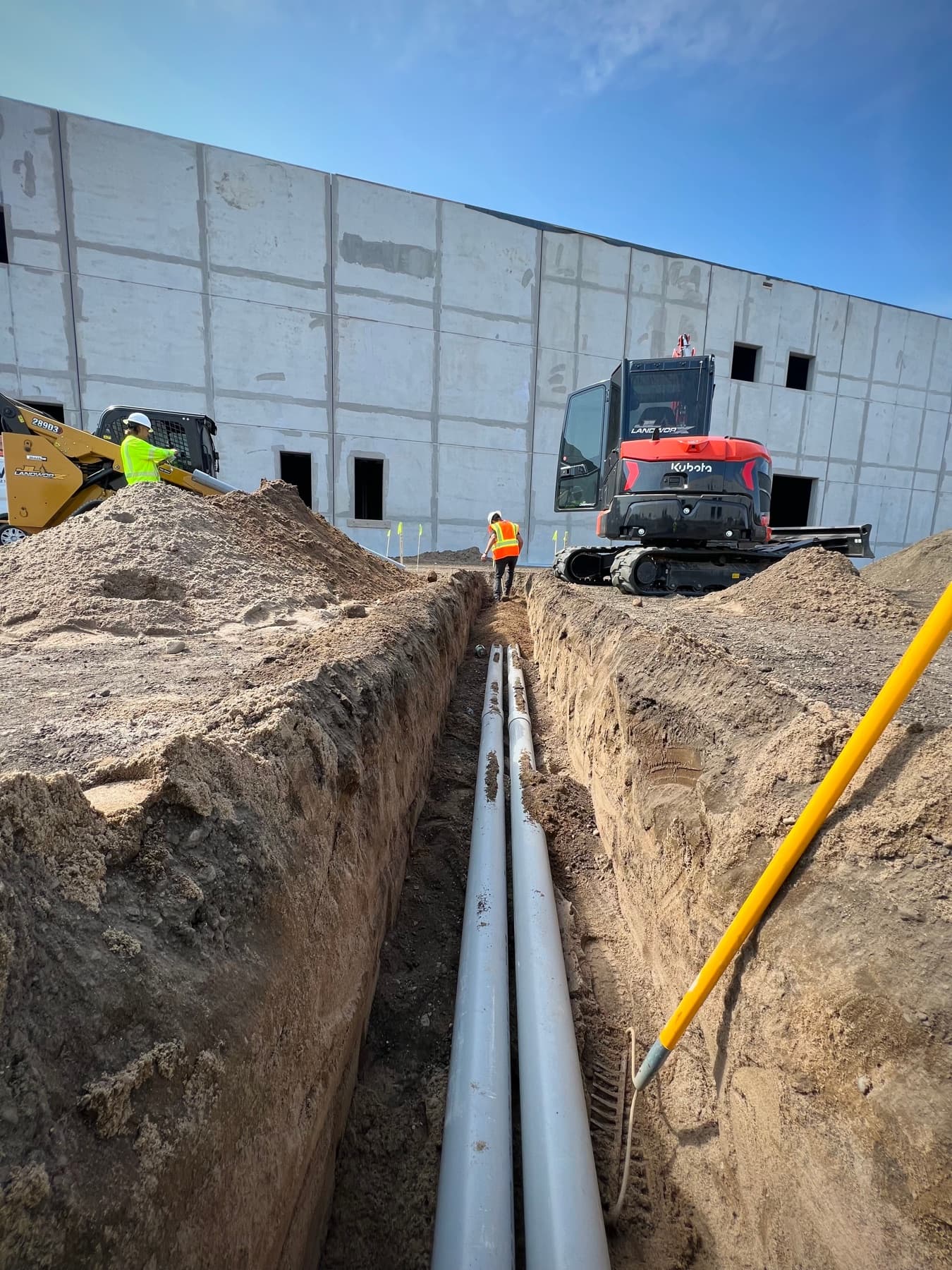
Utility trenching is excavating narrow, properly sloped trenches for buried water, sewer, septic, electric, and other lines — then backfilling and compacting them correctly.
Trenching for planned site work
Every buried utility needs a trench, and the trench determines how well that utility survives Minnesota winters. Depth, bedding, slope, backfill material, and compaction all matter — a poorly backfilled trench settles into a depression across your yard, and a shallow line can freeze. JL Landworx digs utility trenches for water, sewer, septic, electric, and other buried services across Central Minnesota and the greater Twin Cities.
We coordinate with plumbers, electricians, septic installers, and builders, digging to the approved route, depth, slope, bedding, and inspection sequence they provide. Excavation, line installation, any required inspection, backfill, compaction, and restoration are scheduled as connected handoffs so the trench is not left open longer than the project requires.
Problems trenching solves
- A new home or outbuilding needs water, sewer, or electric run to it
- A failing water or sewer line has to be dug up and replaced
- A septic system installation or replacement needs excavation and trenching
- Electrical or data conduit needs to be buried to a garage, shop, or outbuilding
- An old trench was backfilled poorly and has settled into a trough
- A contractor needs an excavating partner who digs to spec and shows up on schedule
What we do
- Water line trenching and service runs to homes and outbuildings
- Sewer line and lateral trenching
- Septic system excavation, trenching, and bed preparation
- Electrical and conduit trenching for underground service
- Trenching to depth requirements for frost protection
- Bedding and pipe-zone backfill to installer specifications
- Backfill in compacted lifts to prevent settlement
- Trench restoration and rough grading after the line is in
Our trenching process
Scope and spec review
We review the route, depth, and bedding requirements with you or your installer, and confirm access, spoils placement, and restoration expectations.
Utility locates
Locates are called in before any digging so existing buried lines are marked. Crossing or working near live utilities is planned, not improvised.
Trench excavation
The trench is dug to the required depth, width, and slope. Suitable spoil is stockpiled alongside for backfill; unsuitable material is hauled off.
Line installation window
The open trench is turned over to your plumber, electrician, or septic installer for the pipe or conduit work and any required inspection.
Backfill and compaction
Once the line is approved, bedding and backfill go in compacted lifts so the trench doesn't settle, and the surface is left at rough grade.
Common projects
- New home utility service runs
- Water and sewer line replacement
- Septic system installation and replacement
- Underground electric to garages, shops, and pole barns
- Farm and acreage utility extensions
- Irrigation and drainage line trenching
Planning your project
What affects cost
- Length and depth of the trench
- Soil conditions — sand digs differently than clay or rock
- How much hand work or careful digging is required near existing utilities
- Backfill material requirements and whether spoil can be reused
- Site access and distance from the work area to spoils or disposal
- Restoration scope — rough grade versus finished lawn or pavement
What affects timing
- Trench length and ground conditions
- Utility locate turnaround before digging can start
- Scheduling of the installing trade and any required inspections
- Weather — frozen or saturated ground slows excavation and compaction
Good to know
- Complete public utility locates and identify private utilities before digging; schedule only after the work area is ready.
- Coordinate the dig date with your plumber, electrician, or septic installer so the trench isn't open longer than it needs to be.
- Know where the line is going before the dig — a route change after the trench is open costs time and money.
- Deep trenches have safety requirements; leave trenching to equipment and operators set up for it.
Related services
Often paired with
- ExcavationExcavation is the controlled removal and placement of soil to prepare a site for construction — from foundations and basements to utilities, driveways, and drainage.Learn more →
- Site PreparationSite preparation is the work that turns raw or cleared land into a buildable site — soil beds, building pads, and subgrade preparation done to plan elevations.Learn more →
- GradingGrading is shaping the ground to the right elevations and slopes — rough grading for construction, finish grading for lawns, and regrading to fix drainage.Learn more →
- Drainage SolutionsDrainage work reshapes or plumbs the ground so water goes where it should — fixing standing water, wet basements, and erosion with swales, culverts, and drains.Learn more →
Plan the next step
Trenching resources
- View project photosSee first-party images of JL Landworx excavation, clearing, wall, demolition, and landscape work.Learn more →
- Browse service areasFind dedicated service pages across Central Minnesota and the greater Twin Cities.Learn more →
- Request a written quoteShare the property address, project goal, access details, and preferred timing so the site review starts with useful information.Learn more →
FAQ
Trenching questions
How deep do utility trenches need to be in Minnesota?
Deep enough that the line is protected from frost and surface loads — the exact depth depends on the utility type, local code, and your installer's specifications. Water and sewer lines generally need to be below frost depth; electrical conduit has its own requirements. We dig to the spec your project requires.
Do you install the pipe or just dig the trench?
We dig, bed, backfill, and compact within the agreed scope. The pipe, wiring, or septic components are installed by the qualified trade responsible for that system. We coordinate around their specifications and any required inspection without promising an approval that belongs to the inspector or authority.
Will the trench settle after it's backfilled?
Settlement risk depends on the excavated material, specified backfill, moisture, compaction method, trench depth, and later surface loads. The scope should define the required backfill and compaction rather than promise that every trench will behave the same way.
Can you trench through an established yard without destroying it?
Trenching creates a disturbed corridor. Before work, agree on the route, protection for nearby improvements, material storage, and whether the finish is rough grade or includes additional restoration. Recovery depends on that scope and later landscape work.
What happens if you find unmarked utilities or rock while trenching?
We stop and deal with it deliberately. Unmarked lines get identified before work continues near them; rock changes the method and sometimes the price, and we talk to you before proceeding either way.
Plan your trenching project
Tell JL Landworx what you need the site to support, where the work is located, and what must happen before or after trenching. We’ll review the scope and provide a project-specific quote and schedule.