
JL Landworx Services
Land Clearing
Land clearing is the removal of trees, brush, stumps, and surface obstacles so a parcel can be built on, farmed, or maintained — from a single building lot to multi-acre tracts.
Land Clearing for planned site work
Raw land doesn't build itself. Whether you're preparing a lot for a new home, opening up acreage for pasture, or reclaiming a fence line that's grown over, the trees, brush, and stumps have to come out first — and they have to come out in a way that leaves the ground ready for what comes next. JL Landworx provides land clearing services across Central Minnesota and the greater Twin Cities.
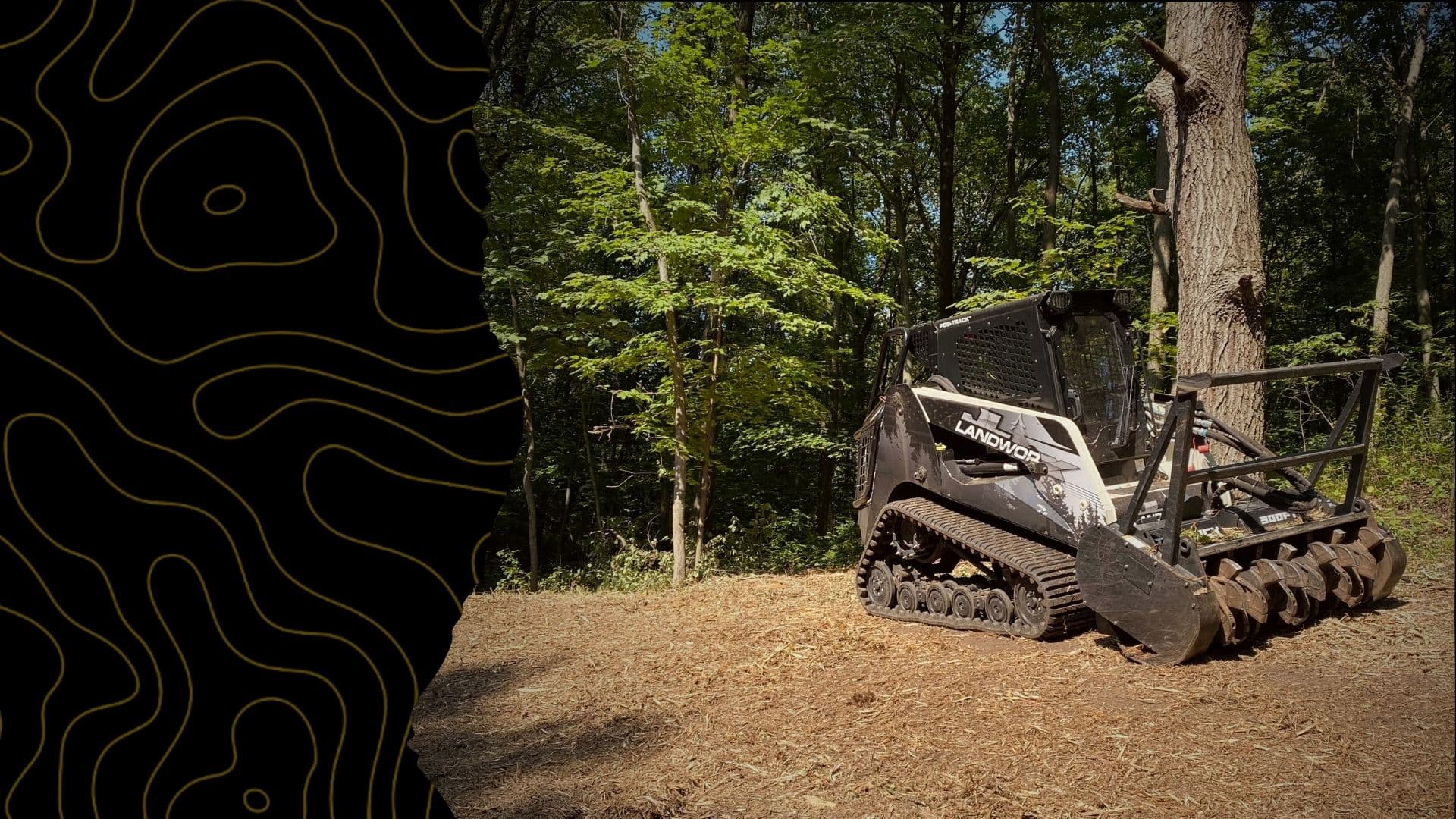
We clear building lots, acreage, trails, pasture, and fence lines using the right method for the site: forestry mulching for low-disturbance work, mechanical clearing and grubbing for full site prep, or a combination of both. Because we also excavate and grade, a cleared site can go straight into building pad or driveway work with the same crew.
Problems land clearing solves
- A wooded or brushy lot needs to be cleared before a home, garage, or outbuilding can go up
- Stumps and roots from old tree removal are in the way of construction or grading
- Overgrown pasture, trails, or fence lines have become unusable
- A parcel needs selective clearing — remove the scrub, keep the mature trees
- An open field or food plot needs to be carved out of standing timber
- A previous clearing job left debris piles, ruts, or half-grubbed stumps behind
What we do
- Lot and acreage clearing for new construction
- Tree and brush removal as part of site clearing
- Stump and root grubbing in areas to be built on or graded
- Forestry mulching for brush and small-diameter timber
- Selective clearing that preserves desirable trees
- Pasture, trail, and fence-line clearing and reclamation
- Debris handling — mulched in place, piled, or hauled off
- Rough grading and cleanup after clearing
Our land clearing process
Site walk and scope
We walk the parcel with you to mark what stays and what goes, confirm boundaries, and decide where mulching versus full removal makes sense.
Method and debris plan
We agree on how material will be handled — mulched in place, piled for you, or hauled off — and flag access routes and any wet or sensitive areas.
Clearing
Trees and brush come down and are processed. Areas to be built on get stumps and roots grubbed out so nothing organic is left under future fill or foundations.
Cleanup and rough finish
Debris is dealt with as planned and the cleared ground is left raked out and roughly graded, ready for the next phase of your project.
Common projects
- Residential building lot clearing
- Acreage clearing for hobby farms and rural homesites
- Pasture reclamation and field expansion
- Trail and recreational path clearing
- Fence-line clearing along property boundaries
- Selective clearing around mature trees and shorelines
- Hunting land and food plot clearing
Planning your project
What affects cost
- Acreage and density of trees and brush
- Tree diameter — mulching small timber costs less than removing large trees
- Whether stumps must be grubbed out or can be cut flush or mulched
- How debris is handled — mulched in place versus piled versus hauled off
- Terrain, slopes, and wet areas that limit equipment access
- Distance from our base and haul distances for debris
- Follow-on work like grading or pad prep done in the same mobilization
What affects timing
- Size and density of the area to be cleared
- Ground conditions — frozen or dry ground moves faster than saturated soil
- The mix of mulching versus cut-and-remove work
- Weather windows, especially spring thaw and extended rain
- Whether clearing is bundled with grading or excavation phases
Good to know
- Mark your property corners and the trees you want to keep before the site walk — it saves time and prevents mistakes.
- Decide early whether stumps need to come out; anything under a future building, driveway, or septic area does.
- Mulched material left on site acts as ground cover and erosion protection; hauled material adds cost.
- If the cleared area will be built on, plan clearing and grading together to avoid mobilizing twice.
Where we work
Land Clearing by area
- Land Clearing in RogersHennepin County, MinnesotaLearn more →
- Land Clearing in BuffaloWright County, MinnesotaLearn more →
- Land Clearing in CorcoranHennepin County, MinnesotaLearn more →
- Land Clearing in DelanoWright County, MinnesotaLearn more →
- Land Clearing in GreenfieldHennepin County, MinnesotaLearn more →
- Land Clearing in HamelHennepin County, MinnesotaLearn more →
- Land Clearing in MinnetonkaHennepin County, MinnesotaLearn more →
- Land Clearing in PlymouthHennepin County, MinnesotaLearn more →
- Land Clearing in WayzataHennepin County, MinnesotaLearn more →
- Land Clearing in St. BonifaciusHennepin County, MinnesotaLearn more →
- Land Clearing in MinnetristaHennepin County, MinnesotaLearn more →
- Land Clearing in LorettoHennepin County, MinnesotaLearn more →
- Land Clearing in ZimmermanSherburne County, MinnesotaLearn more →
- Land Clearing in Maple GroveHennepin County, MinnesotaLearn more →
- Land Clearing in OronoHennepin County, MinnesotaLearn more →
Related services
Often paired with
- Forestry MulchingForestry mulching grinds brush and small trees in place with a single machine, leaving a layer of mulch on the ground — a fast, low-disturbance way to clear land without dozing, piling, or burning.Learn more →
- ExcavationExcavation is the controlled removal and placement of soil to prepare a site for construction — from foundations and basements to utilities, driveways, and drainage.Learn more →
- GradingGrading is shaping the ground to the right elevations and slopes — rough grading for construction, finish grading for lawns, and regrading to fix drainage.Learn more →
- Site PreparationSite preparation is the work that turns raw or cleared land into a buildable site — soil beds, building pads, and subgrade preparation done to plan elevations.Learn more →
- Erosion ControlErosion and sediment control keeps soil on your site during and after construction — silt fence, inlet protection, and stabilization for disturbed ground and shorelines.Learn more →
Plan the next step
Land Clearing resources
- View project photosSee first-party images of JL Landworx excavation, clearing, wall, demolition, and landscape work.Learn more →
- Browse service areasFind dedicated service pages across Central Minnesota and the greater Twin Cities.Learn more →
- Request a written quoteShare the property address, project goal, access details, and preferred timing so the site review starts with useful information.Learn more →
FAQ
Land Clearing questions
What's the difference between forestry mulching and traditional land clearing?
Mulching grinds brush and small trees in place and leaves the material on the ground as cover — fast and low-disturbance. Traditional clearing removes trees and grubs out stumps and roots entirely, which is what you need under building pads, driveways, and septic areas. Most projects use both in different zones of the same parcel.
Do stumps have to be removed before building?
Yes, anywhere a structure, driveway, or septic system will go. Stumps and roots rot over time and leave voids that settle. In yard or pasture areas, stumps can often be mulched flush or cut low instead.
Can you clear my lot but keep certain trees?
Yes. Selective clearing is common on wooded lots. We walk the site with you first and mark the trees that stay, then clear around them, taking care not to damage their root zones more than necessary.
What happens to all the brush and trees you remove?
It depends on the plan we agree to. Material can be mulched and spread on site, piled for you to burn or use, or hauled off. Mulching in place is usually the most economical option.
How long does it take to clear an acre?
It depends on density and tree size. Light brush on open ground goes quickly; dense mature timber with stump removal takes considerably longer. After a site walk we give you a realistic schedule along with the quote.
Plan your land clearing project
Tell JL Landworx what you need the site to support, where the work is located, and what must happen before or after land clearing. We’ll review the scope and provide a project-specific quote and schedule.