
JL Landworx Services
Excavation
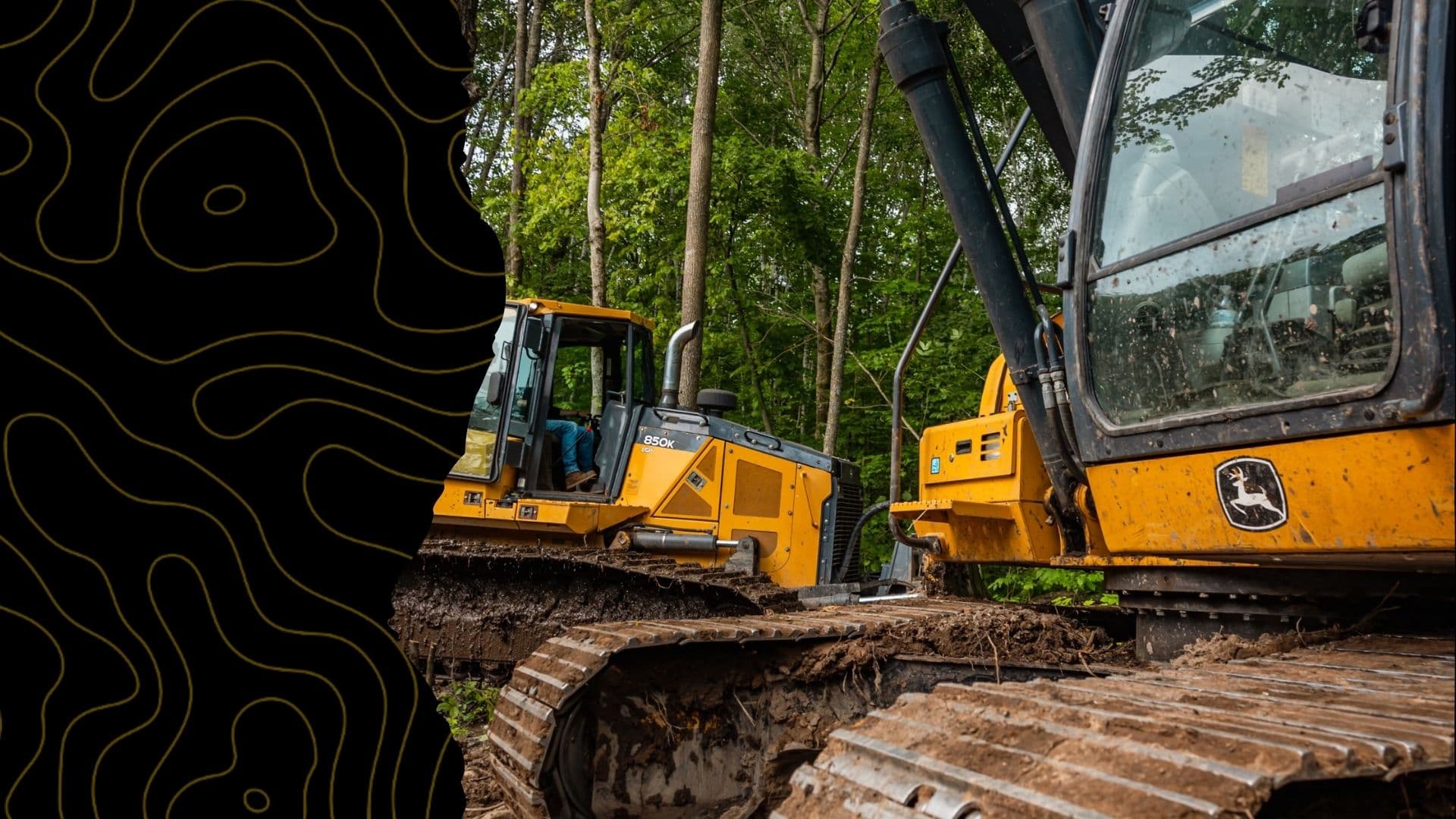
Excavation is the controlled removal and placement of soil to prepare a site for construction — from foundations and basements to utilities, driveways, and drainage.
Excavation for planned site work
Every structure starts below grade. Before a foundation is poured, a driveway is built, or a utility line goes in the ground, the site has to be excavated to the right depth, at the right elevations, with stable soil to build on. JL Landworx provides excavation services for residential, commercial, and municipal projects across the greater Twin Cities and Central Minnesota.
We handle everything from single-family basement digs to full site cuts for new construction. Because we also clear, grade, and install drainage, one crew can take a raw parcel from standing timber to a pad-ready building site without you coordinating multiple contractors.
Problems excavation solves
- A new home, addition, or garage needs a foundation or basement dug to plan elevations
- An old structure, slab, or failed driveway has to come out before new work can start
- Water is pooling where it shouldn't and the site needs re-shaping to drain
- Utilities — water, sewer, septic, electric — need trenches dug and properly backfilled
- A rural lot needs a building pad and driveway cut in before a builder can start
- An existing excavation was left rough or out of spec by another contractor
What we do
- Basement and foundation excavation for new homes, additions, and garages
- Building pad and site-cut excavation for residential and commercial construction
- Utility trenching for water, sewer, septic, and electrical runs
- Driveway excavation and subgrade preparation
- Pond excavation and shaping
- Footing and frost-footing digs
- Mass excavation and cut/fill balancing for site development
- Demolition debris removal and excavation after tear-outs
- Backfill, compaction, and rough grading to plan elevations
Our excavation process
Site walk and scope review
We visit the property, review plans or your project goals, and identify access, spoils, and haul-off considerations before quoting.
Locates and layout
Utility locates are called in before any digging. Excavation limits and elevations are laid out from the site plan or agreed measurements.
Excavation
Soil is cut to the required depths and elevations. Suitable material is stockpiled for backfill; excess or unsuitable spoils are hauled off.
Subgrade preparation
The bottom of the excavation is proofed, shaped, and compacted so the next trade — concrete, utilities, or aggregate base — starts on stable ground.
Backfill and rough grade
Once the buried work is inspected and complete, we backfill in lifts, compact, and leave the site at rough grade, ready for the next phase.
Common projects
- New home and cabin foundation digs
- Garage, pole barn, and outbuilding pads
- Commercial building pads and site cuts
- Septic system and utility trenching
- Driveway and private road excavation
- Pond construction and reshaping
- Tear-out and rebuild sites
Planning your project
What affects cost
- Volume of material to be cut, filled, or hauled
- Soil conditions and whether unsuitable material must be removed
- Depth of the excavation and shoring or benching needs
- Site access for equipment and trucks
- Distance spoils must be hauled and disposal fees
- Groundwater or rock encountered during the dig
- Time of year and ground conditions
What affects timing
- Size and depth of the excavation
- Weather — saturated or frozen ground slows digging and compaction
- Utility locate turnaround before work can begin
- Inspection hold points for footings or buried utilities
- Haul distance and availability of disposal sites
Good to know
- Request public utility locates before digging and confirm any private utilities that the public locate does not cover.
- Have your site plan, survey, or builder's stakeout ready so excavation limits are unambiguous.
- Decide early where excess soil should go; keeping suitable fill on site usually saves money.
- Spring thaw and extended wet periods can restrict access to soft sites.
Where we work
Excavation by area
- Excavation in RogersHennepin County, MinnesotaLearn more →
- Excavation in DelanoWright County, MinnesotaLearn more →
- Excavation in Elk RiverSherburne County, MinnesotaLearn more →
- Excavation in GreenfieldHennepin County, MinnesotaLearn more →
- Excavation in HamelHennepin County, MinnesotaLearn more →
- Excavation in LorettoHennepin County, MinnesotaLearn more →
- Excavation in Maple GroveHennepin County, MinnesotaLearn more →
- Excavation in MinnetristaHennepin County, MinnesotaLearn more →
- Excavation in MinnetonkaHennepin County, MinnesotaLearn more →
- Excavation in OronoHennepin County, MinnesotaLearn more →
- Excavation in PlymouthHennepin County, MinnesotaLearn more →
- Excavation in WayzataHennepin County, MinnesotaLearn more →
- Excavation in RockfordWright and Hennepin counties, MinnesotaLearn more →
- Excavation in MoundHennepin County, MinnesotaLearn more →
Related services
Often paired with
- Site PreparationSite preparation is the work that turns raw or cleared land into a buildable site — soil beds, building pads, and subgrade preparation done to plan elevations.Learn more →
- GradingGrading is shaping the ground to the right elevations and slopes — rough grading for construction, finish grading for lawns, and regrading to fix drainage.Learn more →
- Utility TrenchingUtility trenching is excavating narrow, properly sloped trenches for buried water, sewer, septic, electric, and other lines — then backfilling and compacting them correctly.Learn more →
- Drainage SolutionsDrainage work reshapes or plumbs the ground so water goes where it should — fixing standing water, wet basements, and erosion with swales, culverts, and drains.Learn more →
- Land ClearingLand clearing is the removal of trees, brush, stumps, and surface obstacles so a parcel can be built on, farmed, or maintained — from a single building lot to multi-acre tracts.Learn more →
Plan the next step
Excavation resources
- View project photosSee first-party images of JL Landworx excavation, clearing, wall, demolition, and landscape work.Learn more →
- Browse service areasFind dedicated service pages across Central Minnesota and the greater Twin Cities.Learn more →
- Request a written quoteShare the property address, project goal, access details, and preferred timing so the site review starts with useful information.Learn more →
FAQ
Excavation questions
How much does excavation cost for a new home basement?
It depends on the size and depth of the dig, soil conditions, how much material has to be hauled off, and site access. A straightforward basement dig on good soil costs far less than one with high groundwater or long haul distances. We quote every job after a site visit so the number reflects your actual site.
Do I need utility locates before excavation?
Public utility locates and any needed private-utility identification must be complete before excavation begins. Confirm who is responsible for each part during planning so the site is ready on the scheduled day.
Can you haul away the extra dirt?
Yes. When spoils can't stay on site, we haul them off. Haul distance and disposal fees affect the price, which is why we discuss spoils management during the site walk.
How long does a typical residential excavation take?
The schedule depends on the excavation volume and depth, access, material handling, required inspections, ground conditions, and weather. The estimate should set a project-specific sequence instead of relying on a generic duration.
What happens if you hit rock or groundwater?
We stop and talk to you before proceeding. Both change the method and the cost, and you should never learn about it on the invoice.
Plan your excavation project
Tell JL Landworx what you need the site to support, where the work is located, and what must happen before or after excavation. We’ll review the scope and provide a project-specific quote and schedule.