
JL Landworx Services
Forestry Mulching
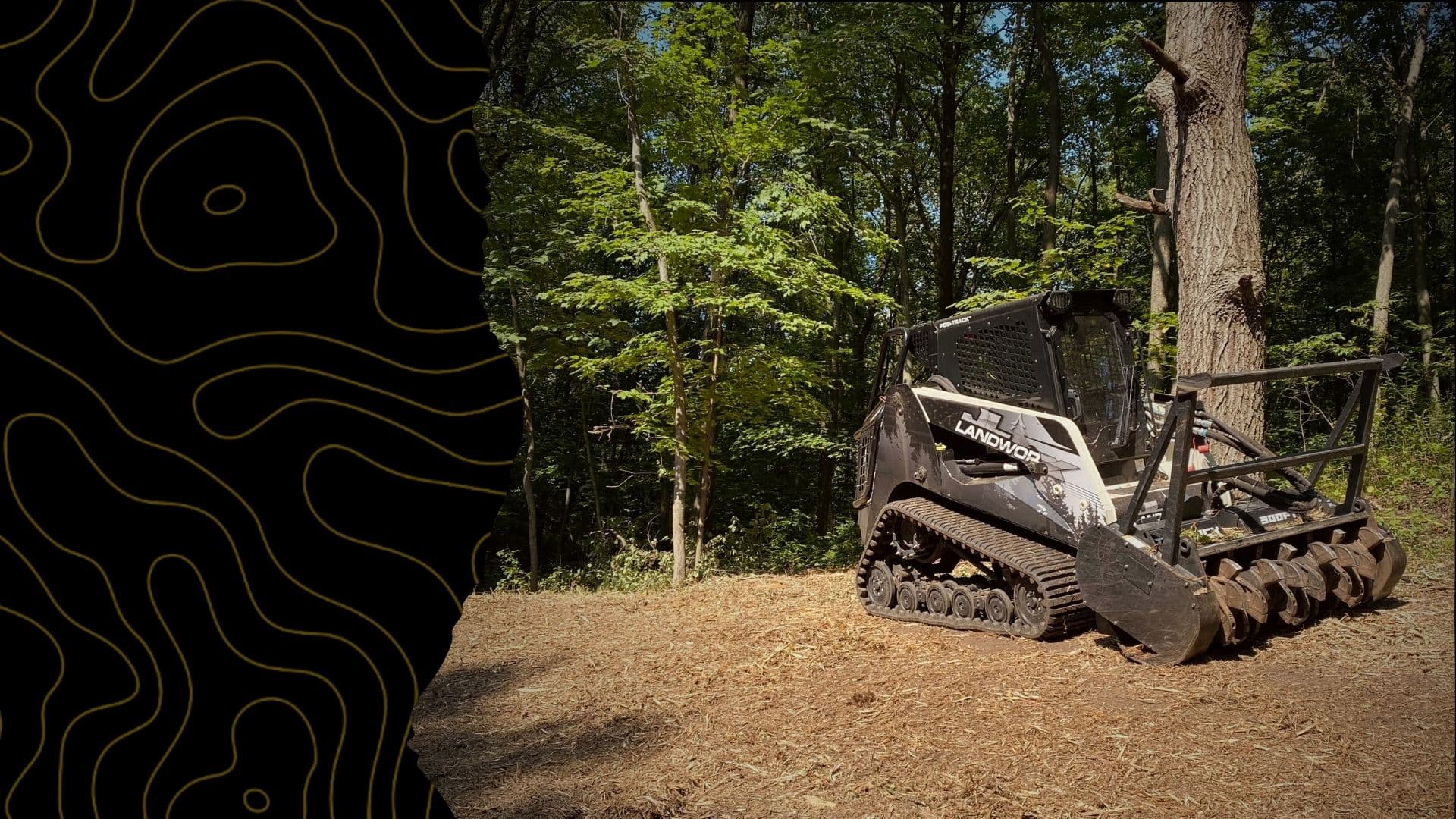
Forestry mulching grinds brush and small trees in place with a single machine, leaving a layer of mulch on the ground — a fast, low-disturbance way to clear land without dozing, piling, or burning.
Forestry Mulching for planned site work
Forestry mulching uses a mulching head to process suitable brush and smaller growth in place, leaving chips across the treated ground. Site conditions, stem size, desired finish, debris volume, and any applicable restrictions determine whether mulching alone or a combined clearing method fits the project. JL Landworx provides forestry mulching throughout Central Minnesota and the greater Twin Cities.
It's the right tool for a lot of jobs: reclaiming overgrown pasture, opening up trails, clearing fence lines, or thinning scrub growth around trees you want to keep. Because the machine processes material in place instead of pushing it over with a dozer, disturbance to the soil and to the trees you're keeping stays minimal. Where stumps have to come out for construction, we follow mulching with grubbing as part of a full land clearing scope.
Problems forestry mulching solves
- Brush and saplings have taken over pasture, trails, or field edges
- A wooded lot needs thinning but the mature trees should stay untouched
- Burning or hauling debris isn't practical or permitted on the property
- A fence line has disappeared under years of growth and needs to be reopened
- The land needs clearing but you don't want it stripped bare and rutted by dozers
- Underbrush is choking out desirable trees and limiting use of the property
What we do
- In-place mulching of brush, saplings, and small-diameter trees
- Selective clearing that works around trees and features you want to keep
- Pasture and field-edge reclamation
- Trail, access route, and shooting lane clearing
- Fence-line and property-boundary clearing
- Underbrush removal to open up wooded lots
- Mulch layer left in place for ground cover and erosion protection
- Combined mulching and grubbing scopes for sites heading into construction
Our forestry mulching process
Site walk and marking
We walk the property with you to mark keep trees, confirm boundaries and clearing limits, and note wet areas or obstacles the machine should avoid.
Mulching
The mulcher works through the marked area, grinding standing material in place and working around the trees and features that stay.
Detail passes
Edges, fence lines, and areas around keep trees get a finishing pass so the cleared lines are clean and usable.
Walkthrough
We review the finished area with you — the ground is left covered in an even layer of mulch, with no piles to deal with.
Common projects
- Pasture and field reclamation
- Trail and recreational path clearing
- Fence-line clearing on rural parcels
- Selective thinning on wooded residential lots
- Hunting land, food plot, and shooting lane preparation
- Underbrush removal around cabins and lake properties
Planning your project
What affects cost
- Acreage and density of the growth to be mulched
- Average diameter of trees — small saplings mulch much faster than larger stems
- Terrain and slopes that affect machine productivity
- How selective the work is — clearing around keep trees takes more time than open runs
- Site access and distance from our base
- Whether mulching is combined with grubbing or other clearing work
What affects timing
- Total acreage and density of material
- Ground conditions — frozen or firm ground allows faster work than saturated soil
- The amount of selective, detail-oriented work around keep trees
- Weather, particularly spring thaw restrictions on soft sites
Good to know
- Mark the trees you want to keep before work starts — flagging tape on keep trees prevents costly mistakes.
- Mulching handles brush and small trees well; large-diameter timber may need to be cut and removed first.
- Mulched stumps remain at or just below grade — fine for pasture and trails, but not under future buildings, driveways, or septic areas.
- The mulch layer left behind suppresses regrowth and protects the soil; plan on follow-up maintenance for persistent species.
Related services
Often paired with
- Land ClearingLand clearing is the removal of trees, brush, stumps, and surface obstacles so a parcel can be built on, farmed, or maintained — from a single building lot to multi-acre tracts.Learn more →
- Erosion ControlErosion and sediment control keeps soil on your site during and after construction — silt fence, inlet protection, and stabilization for disturbed ground and shorelines.Learn more →
- GradingGrading is shaping the ground to the right elevations and slopes — rough grading for construction, finish grading for lawns, and regrading to fix drainage.Learn more →
- ExcavationExcavation is the controlled removal and placement of soil to prepare a site for construction — from foundations and basements to utilities, driveways, and drainage.Learn more →
Plan the next step
Forestry Mulching resources
- View project photosSee first-party images of JL Landworx excavation, clearing, wall, demolition, and landscape work.Learn more →
- Browse service areasFind dedicated service pages across Central Minnesota and the greater Twin Cities.Learn more →
- Request a written quoteShare the property address, project goal, access details, and preferred timing so the site review starts with useful information.Learn more →
FAQ
Forestry Mulching questions
How large of a tree can a forestry mulcher handle?
Mulchers are built for brush and small-diameter trees. Within that range they grind material in place quickly; beyond it, stems typically need to be cut and removed by other means. On the site walk we'll tell you honestly which parts of your property mulch well and which need a different approach.
Does forestry mulching remove the stumps?
No. Mulching grinds material down to roughly grade level, but the stump and root system stay in the ground. That's fine for pasture, trails, and general clearing. For building pads, driveways, or septic areas, stumps need to be grubbed out — which we can do as a follow-up phase.
Will the brush grow back after mulching?
Some species re-sprout from the roots. The mulch layer suppresses a lot of regrowth, and one follow-up pass or spot treatment usually handles what comes back. We'll tell you what to expect based on what's growing on your property.
Is mulching better than bulldozing for my land?
For brush and small trees where you don't need stumps removed, usually yes — it's faster, leaves no piles, and doesn't strip the topsoil. For construction sites where stumps and roots must come out, dozing and grubbing is the right method. Many projects use mulching in some areas and full clearing in others.
What does the property look like afterward?
Cleared ground covered in an even layer of wood chips. It's usable immediately — you can walk it, drive it, or mow it once the mulch settles — and the chips break down into the soil over time.
Plan your forestry mulching project
Tell JL Landworx what you need the site to support, where the work is located, and what must happen before or after forestry mulching. We’ll review the scope and provide a project-specific quote and schedule.